Technology can support a strong operating model, but it cannot compensate for the absence of one.
EstateWorks is designed to help Trust & Estate organizations make their work more visible, consistent and reliable. But that does not mean it is the right solution for every organization — or that every organization is ready to implement it.
In some circumstances, the underlying conditions simply aren't there yet.
Here are four signs that EstateWorks may not be the right next step for your organization.
1. Insufficient Trust and Estate Expertise
EstateWorks has been purpose-built around the operational requirements of Trust & Estate work. But it does not replace the professional expertise required to perform that work.
Your organization still needs to understand what needs to happen, when it needs to happen and how different types of matters should be handled.
EstateWorks can help you define those processes, apply them consistently and make their execution visible. But the technology cannot determine what your operating model should be without the underlying Trust & Estate expertise.
If you are still developing that expertise, establishing it may need to come before implementing a system to support it.
2. Limited Operational Complexity
Not every Trust & Estate operation needs a purpose-built operational platform.
If you manage a relatively small number of straightforward matters, with few people involved and limited need for coordination or management oversight, simpler tools may be entirely adequate.
The need for EstateWorks tends to increase as the operation becomes more complex.
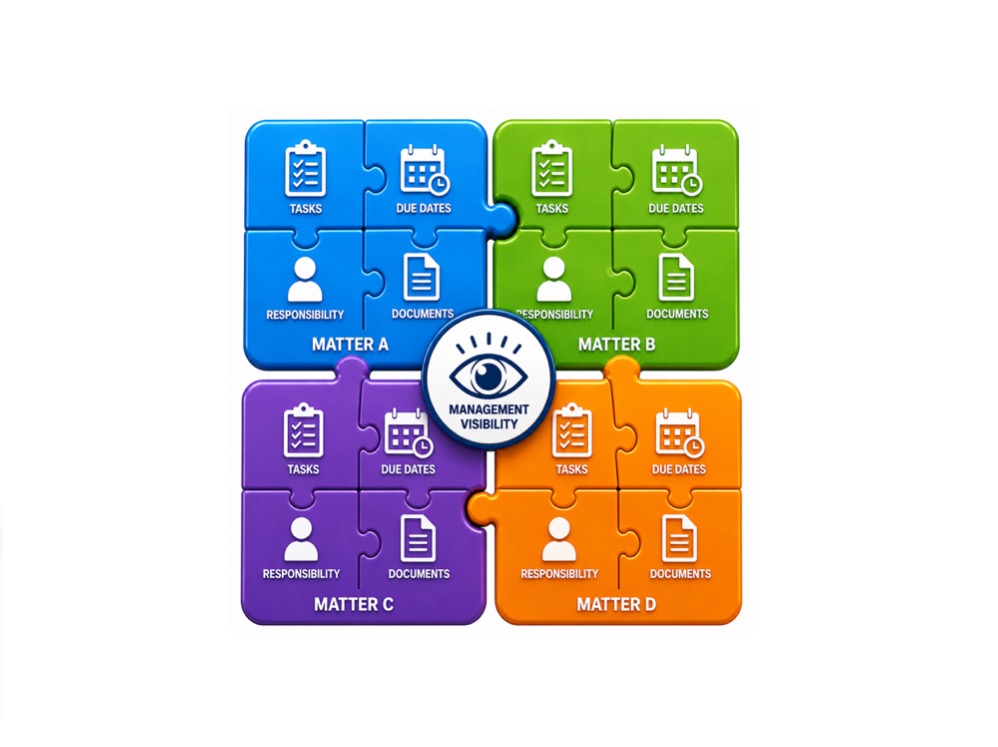
More matters. More people. More handoffs. More due dates. Different matter types. Multiple teams or offices. Greater need for consistency. Greater need for management visibility.
At that point, the challenge is no longer simply keeping track of individual matters. It is coordinating and managing the operation behind them.
If that challenge does not yet exist in your organization, EstateWorks may be more infrastructure than you need.
3. Unwillingness to Work in the System
EstateWorks can only provide reliable operational visibility if the information needed to manage the work is maintained within the system.
That does not mean creating information simply for the sake of reporting. Ideally, the opposite should happen.
Tasks are assigned because someone needs to perform them. Due dates are established because the work needs to be completed on time. Matter information is recorded because people need it to do their jobs. As the work is managed, the information needed to understand the matter and the operation is created naturally.
But that requires people to actually work within the system.
If important information continues to live primarily in personal calendars, email, spreadsheets, documents and individual knowledge, the organization will not get the consistency or visibility it is looking for.
Technology cannot create an operating system that people are unwilling to use.
4. Lack of Management Commitment
EstateWorks can help an organization apply its operating model consistently. It cannot substitute for management.
Someone still needs to establish expectations about how work should be performed, make decisions about processes and responsibilities, and support consistent adoption across the organization.
This becomes particularly important when implementation requires people to change established ways of working.
Without management commitment, different teams can continue to work in different ways, processes can gradually diverge and use of the system can become optional. The technology may be available, but the operating model behind it never becomes established.
EstateWorks works best when management sees operational consistency and visibility as organizational priorities — and is prepared to support the changes required to achieve them.
So, Are You Ready for EstateWorks?
None of these conditions necessarily means EstateWorks will never be appropriate for your organization.
They may simply mean there is some work to do first.
You may need to strengthen your Trust & Estate expertise. Your operation may need to reach a level of complexity where a purpose-built platform provides meaningful value. Your teams may need to be ready to manage their work within a common system. Or management may need to establish greater clarity around how the operation should work.
Recognizing those issues before implementation is far better than discovering them afterwards.
Because successful implementation is not simply about choosing the right technology.
It is about having an operation that is ready to take advantage of it.
Think you may be ready? See EstateWorks in action.
Schedule a Demo