
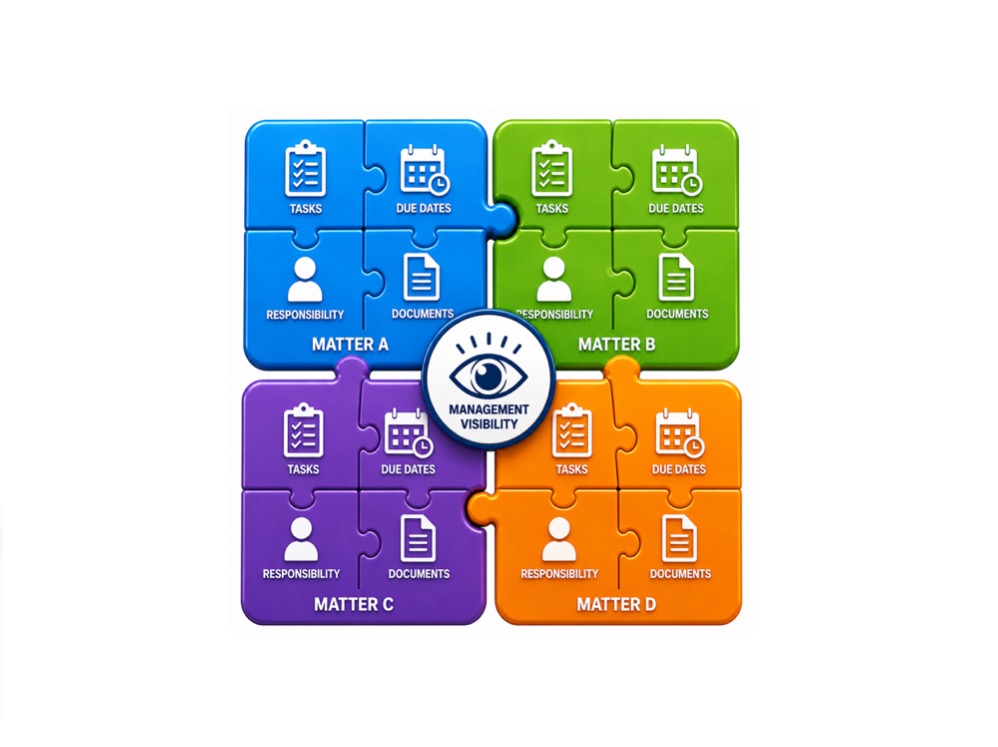
Inherent Visibility: When the Work Creates Its Own Visibility
By Paul Edwards, CEO, EstateWorks Systems LLC
Visibility is usually treated as a reporting problem.
Someone needs to understand the status of a matter, so they ask questions, review emails and notes,
or call a meeting. Management needs to understand the operation, so information is gathered and
assembled into spreadsheets and reports.
In each case, the work happens first, and visibility is created afterwards.
But visibility doesn't have to work that way.
If work is performed within the right operating system, much of the information people need can be
created naturally as the work is being done.
A task is assigned, so responsibility is visible. A due date is established, so timing is visible. The task is
completed, so progress is visible. Matter information is recorded and available to those who need it.
Doing the work creates the visibility.
That is what we mean by Inherent Visibility.
Three Levels of Visibility
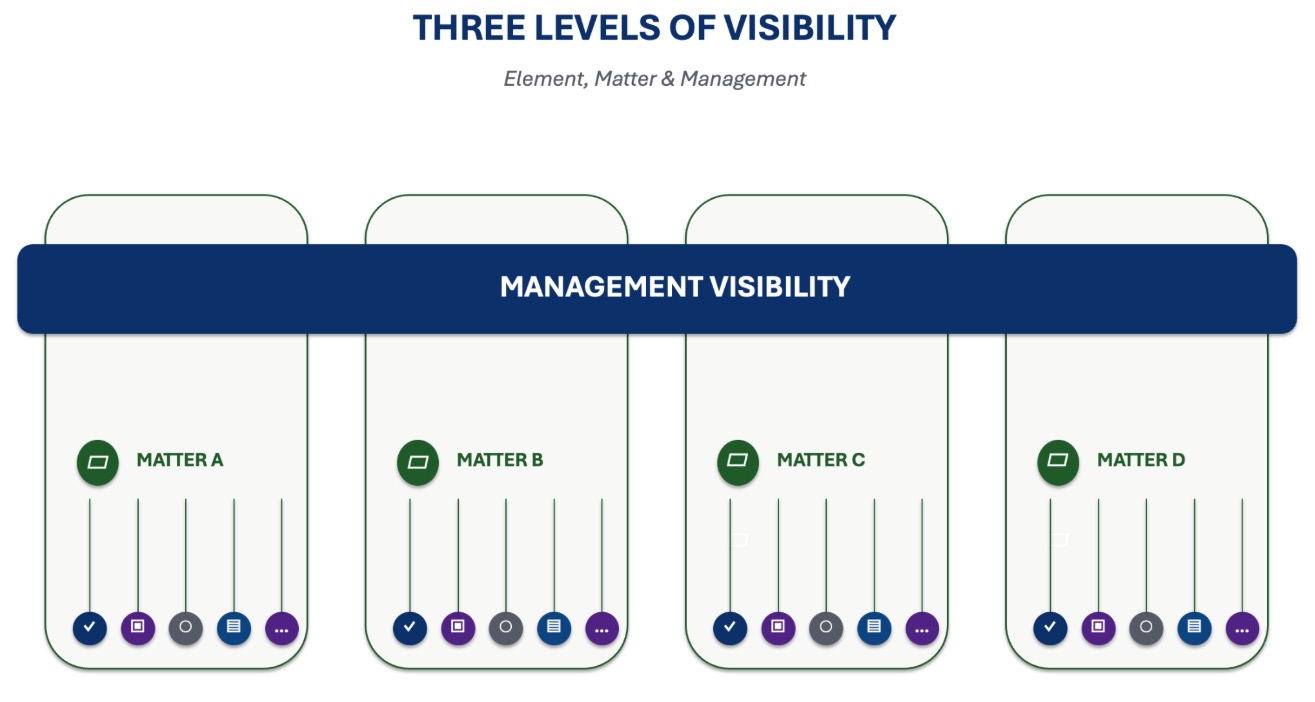
In a Trust & Estate organization, visibility is needed at three levels.
The first is individual work visibility.
At the individual level, people can see what they individually need to do and the information they need to do it.
The second is matter visibility.
The individual elements of the work—tasks, due dates, responsibilities, documents, information, notes
and decisions—need to be visible to everyone who needs to understand the matter—independent of who is responsible. Together, they
provide a picture of what has happened, what is happening, what remains outstanding and where
attention may be required.
The third is management visibility.
Equivalent information can be brought together across matters to provide a view of the operation as a
whole, depending on management priorities.
These can look like three different information problems. They aren't.
They are three different views of the underlying work:
Do the work → the work is visible to the individual → the matter is visible to the team → the operation
is visible to management.
The Visibility Tax
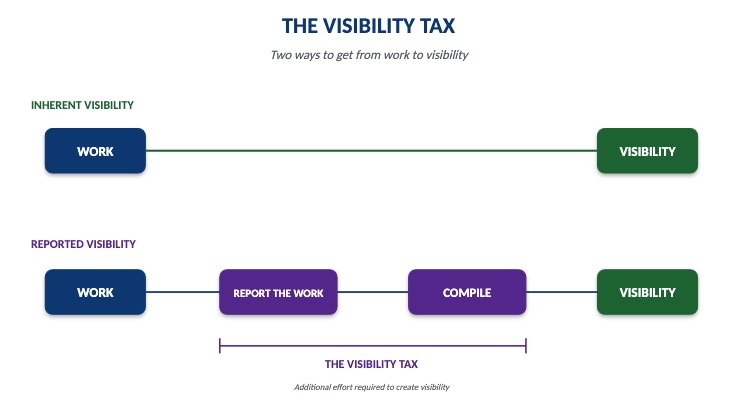
When visibility is not inherent in the way work is managed, organizations have to create it separately.
At the matter level, that often means asking questions.
Has this been done? Who is handling it? When is it due? Did we receive the document? Has someone
followed up?
At the management level, the questions are different.
How many matters have reached this stage? Which matters have an upcoming due date? Where is work
falling behind? How is work distributed? Where does management need to pay attention?
Answering those questions requires information from multiple matters to be brought together.
When that information is not inherently available, organizations introduce shared tracking
spreadsheets, status meetings, matter lists and reports.
But creating that management visibility requires effort at both ends. The people doing the work have
to report what has happened, and someone then has to compile that information into a useful
view of the operation.
When things get busy, completing the work is naturally the priority. Updating a spreadsheet or preparing
a status report can wait. The information used to create visibility then starts to diverge from the work it
is supposed to represent.
This is the visibility tax: the additional effort required to make work visible when visibility is not produced
naturally by the way the work is performed.
From Reported Visibility to Inherent Visibility
The difference is not whether information gets recorded. It is why and when it is captured.
With reported visibility, information is captured because somebody else needs to know what is
happening.
With Inherent Visibility, it is captured because it is part of managing the work itself.
Consider a due date:
If it exists only in an individual's calendar, someone else who needs to understand the matter may have
to ask for it. A manager who wants to compare the equivalent due date across multiple matters may
need it transferred into a separate tracking system.
If the due date is part of the matter's underlying workflow, the situation is different.
The individual can see it as part of managing their work. The same due date is available to others who
need to understand the matter. And management can view the equivalent due date across multiple
matters.
Each level of visibility is created from the same underlying operational information for each matter.
Consistency Makes Aggregation Possible
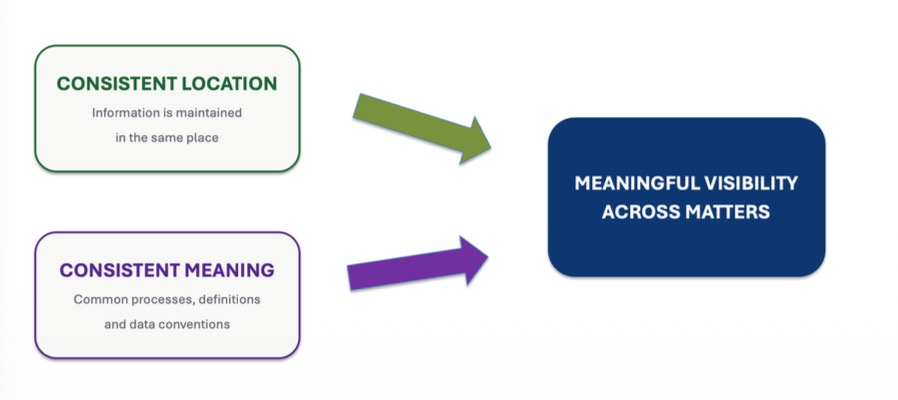
For this to work, operational information has to be consistent in two ways.
The first is where information is maintained.
If one team records information in a spreadsheet, another puts it in a document, and a third relies on
someone's notes or calendar, the information may exist, but it is fragmented.
The second is what the information means.
For information to be meaningfully compared across matters, teams need to use the same basic
processes, definitions and data conventions.
"Opened Date" provides a simple example. It is not enough for every team to have a field called
"Opened Date." They also need a common understanding of what that date represents, how it should
be established, and how it relates to the underlying process.
Without the first type of consistency, the information is fragmented. Without the second, apparently
equivalent information may not actually be equivalent.
Inherent Visibility therefore requires both a consistent place for operational information and a
consistent operating model behind it.
What Changes When Visibility Is Inherent
People spend less time looking for information.
Individuals can see what they need to do. Someone who needs to understand a matter does not have to
chase colleagues for updates or piece together its status from emails, documents and conversations.
Management does not have to ask teams to reproduce information in a separate format to understand
the operation.
The information is already there because it was created through the work itself and is sitting in an
accessible system.
That reduces dependence on individual knowledge and makes it easier to collaborate, hand work over
and understand unfamiliar matters.
It also makes visibility more scalable.
More matters create more work and operational information.
They do not need to create more reporting effort.
Building Inherent Visibility into Trust & Estate Operations
This is the principle behind the way EstateWorks approaches Trust & Estate operations.
EstateWorks brings matter information, processes, responsibilities, tasks and due dates together
within an operating environment where the organization's operating model can be applied through the
work.
At the individual level, people can see what they need to do and the information they need to do it.
At the matter level, the individual elements of the work come together to provide visibility to everyone
who needs to understand the matter.
At the management level, equivalent information can be brought together across matters to provide
visibility into the operation as a whole.
The information does not have to be recreated at each level. It is created through the work.
That is the difference between reporting what has happened and making what is happening inherently
visible.
See how EstateWorks can create Inherent Visibility across your Trust & Estate operation.
More Trust and Estates Workflow Resources
Other articles that you may find interesting.
-

article
The 3 Levels of Visibility in Trust & Estates
When people talk about improving visibility in a Trust & Estate organization, they can mean several different things.
Read More3 Min. Read
-
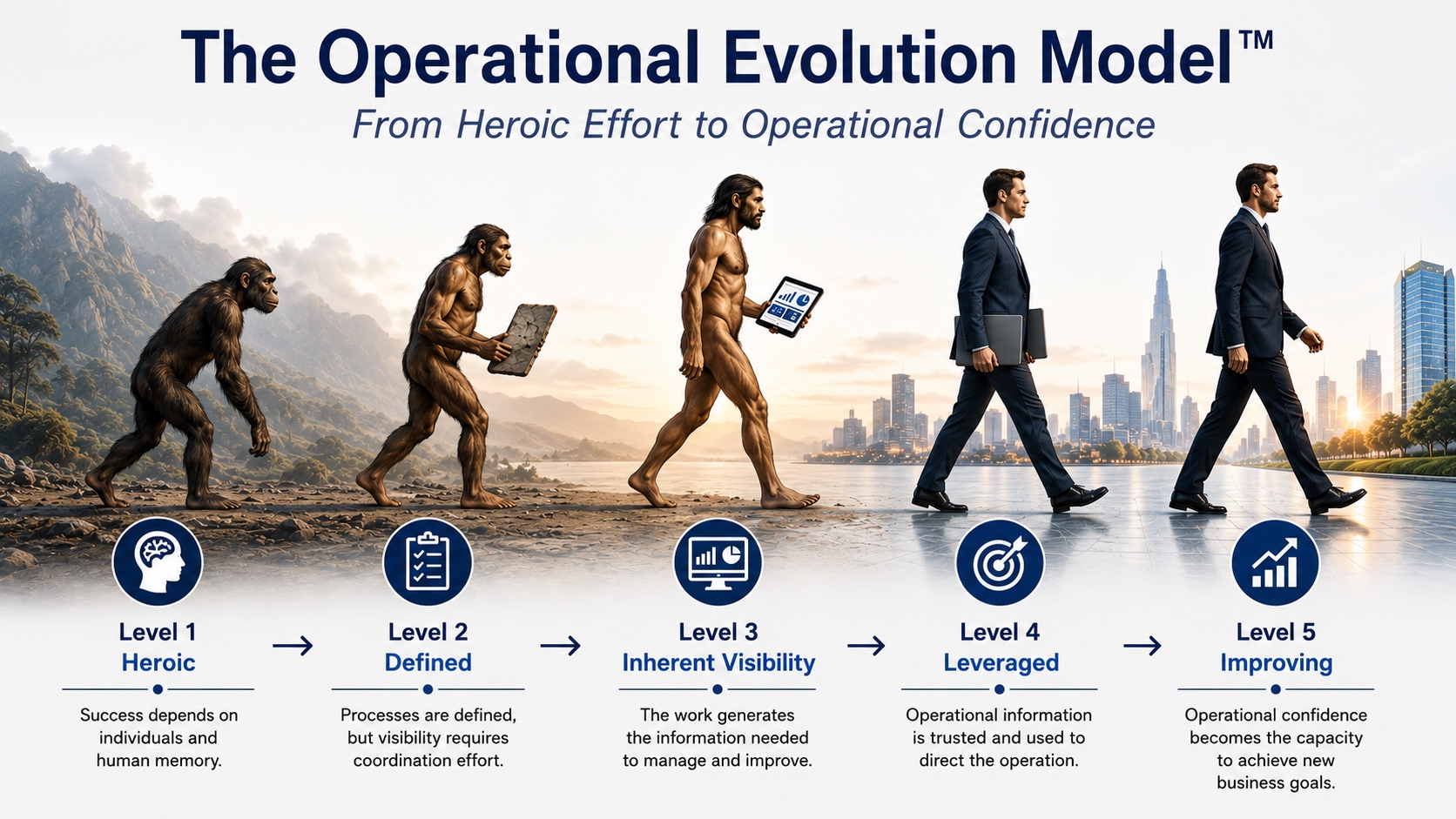
article
The Operational Evolution Model
From Heroic Effort to Operational Confidence.
Read More2 Min. Read
-

article
When People Become the System, the Operating Model has Failed
Your people should be running the system - not being the system.
Read More3 Min. Read