From Heroic Effort to Operational Confidence
Every Trust and Estate organization evolves.
In the early stages, success depends largely on experienced people. They know the work, remember the details and instinctively keep everything moving. The operation succeeds because capable people continually compensate for its complexity.
As organizations grow, however, something changes.
More people become involved, more matters become active, and more conversations are needed simply to keep everyone aligned. Managers spend increasing amounts of time understanding the operation before they can improve it.
Eventually, the limiting factor is no longer professional expertise - it is the operating model itself.
At that point, progress depends not on working harder, but on evolving the way the organization operates.
Over many years of working with Trust and Estate organizations, I've been struck by how consistently this evolution follows the same pattern. Organizations don't move from "bad" to "good." They evolve through a series of recognizable stages, each with its own characteristics, constraints and opportunities.
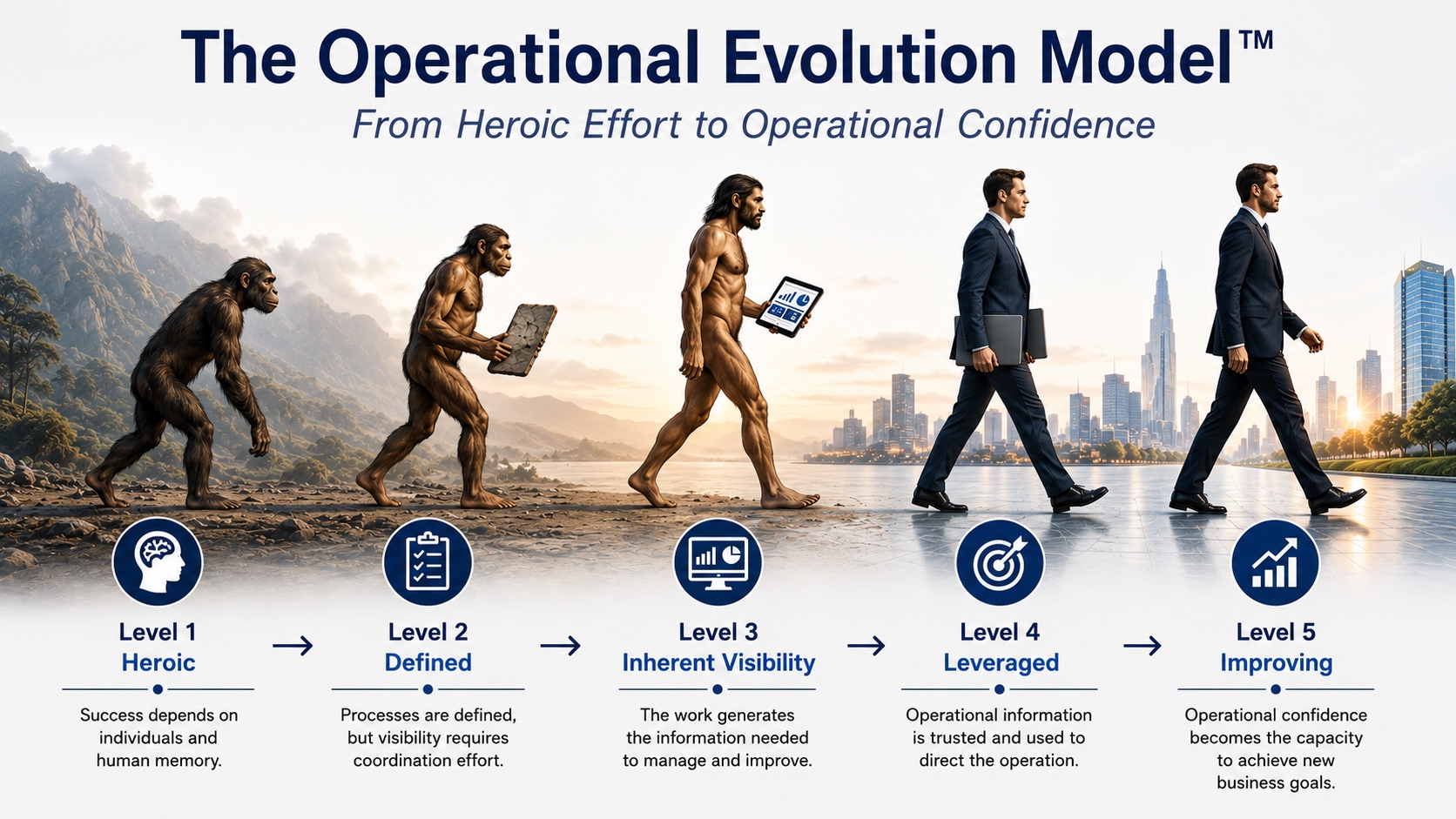
Over time, those observations became the foundation for The Operational Evolution Model™.
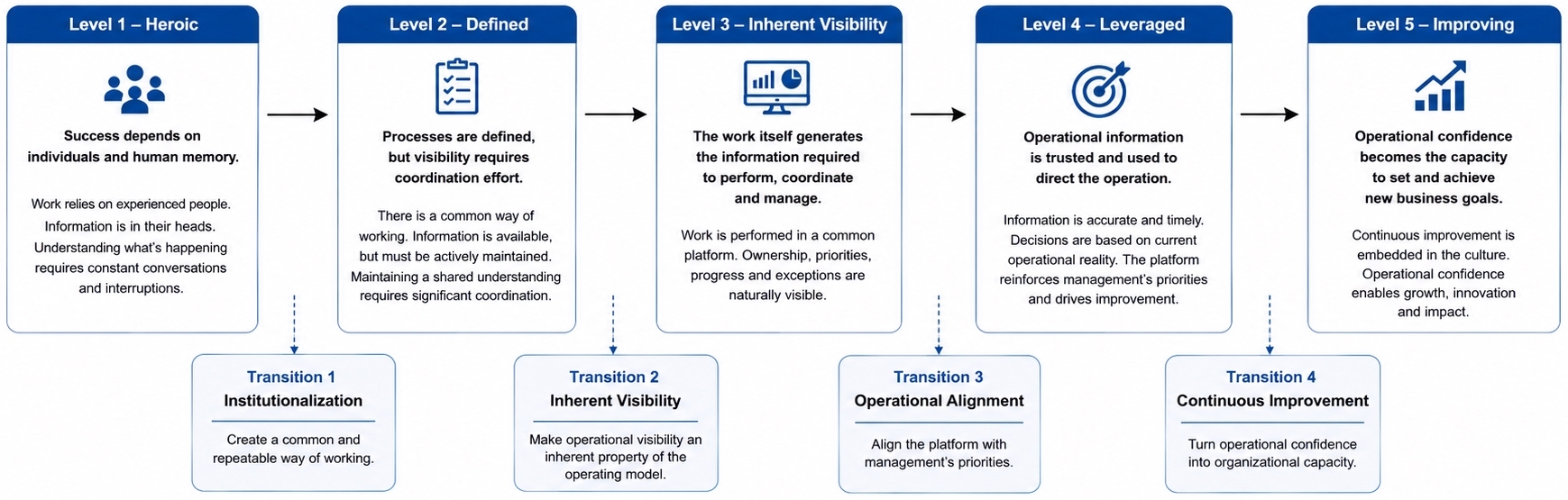
The framework describes five stages through which organizations progressively reduce operational friction, increase operational confidence and create the capacity to pursue broader business goals.
It is not intended to be a maturity scorecard. Most organizations will recognize elements of several levels. Its purpose is to help identify the dominant operating model, the constraint that is limiting further progress and the transition required to move forward.
One aspect of the model is particularly important.
The greatest value lies not in the five levels themselves, but in the transitions between them.
Each transition represents a fundamental change in how work is performed, how operational visibility is created and how management directs its attention.
The outcome is not simply a more efficient operation.
It is A Calm Practice™ — where operational confidence, rather than operational effort, becomes the defining characteristic.
A more complete description of the model levels and transitions can be downloaded here:
Download PDF