
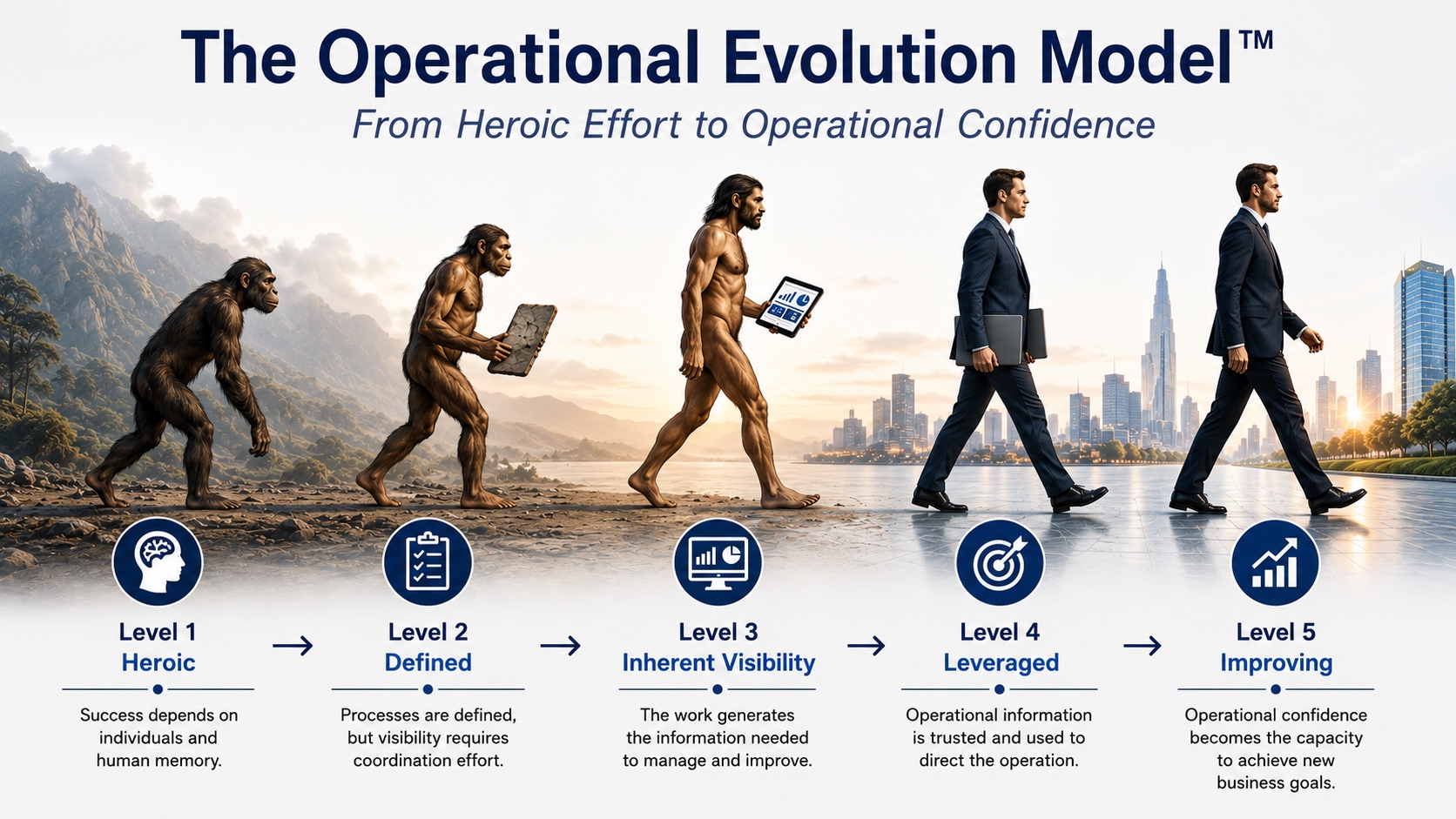
Trust & Estates Operational Evolution Model™
By Paul Edwards, CEO, EstateWorks Systems LLC
From Heroic Effort to Operational Confidence
Every Trust & Estate organization evolves.
In the early stages, success often depends heavily on experienced people. They know the work, remember the details and instinctively keep everything moving.
As organizations grow, however, that becomes increasingly difficult to sustain. More people become involved, more matters become active, and more coordination is needed simply to keep everyone aligned. Managers spend increasing amounts of time understanding the operation before they can improve it.
The Trust & Estates Operational Evolution Model™ describes five stages through which organizations progressively reduce operational friction, increase operational confidence and create the capacity to pursue broader business goals.
The model is intended as a diagnostic framework rather than a scorecard. Organizations may exhibit characteristics of more than one level. The value lies in identifying the dominant operating model, understanding the constraint that limits further progress, and—most importantly—recognizing the transition required to move forward.
The ultimate outcome is not simply greater operational efficiency.
It is A Calm Practice™ — where operational confidence, rather than operational effort, becomes the defining characteristic.
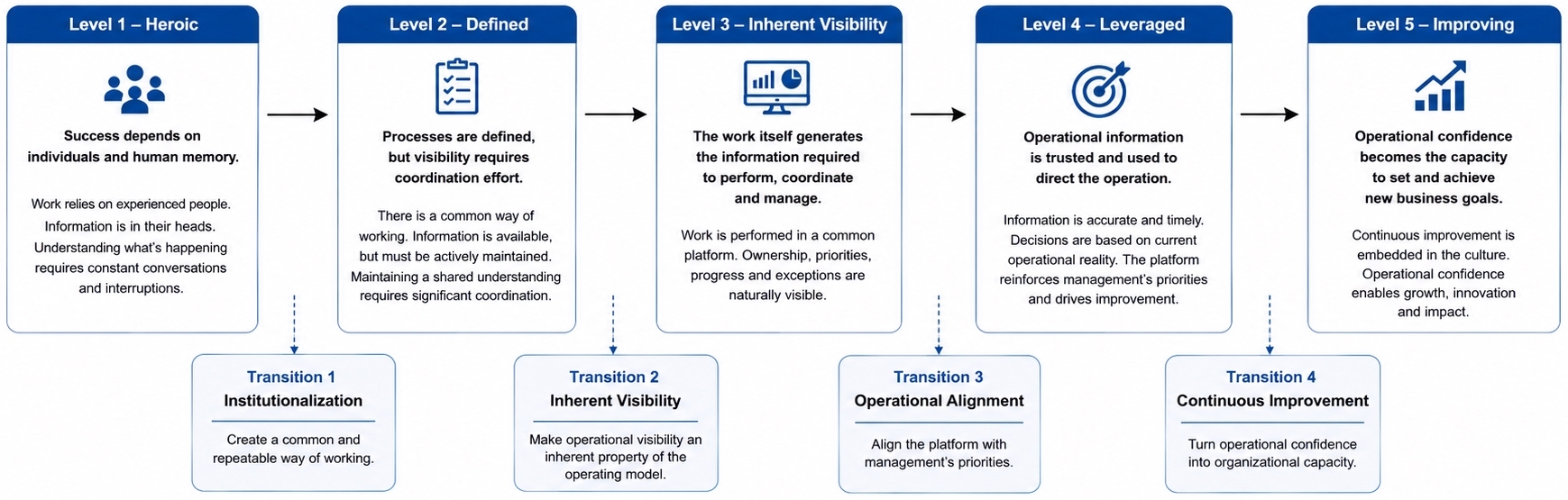
How to Use the Model
The model is most useful when read as a progression rather than as five separate levels.
Each level describes a recognizable operating model. But the real value lies in the transitions between them. Each transition represents a fundamental change in how work is performed, how operational visibility is created and how management directs its attention.
The question is therefore not simply:
“Which level are we?”
But rather:
“What is currently limiting us — and what needs to change for us to move forward?”
Level 1 — Heroic
At the Heroic level, the organization depends primarily on experienced individuals.
Knowledge resides largely in people's heads. They know what needs to happen, remember important dates and commitments, and understand the history and current status of their matters.
The operation succeeds because capable people continually compensate for weak operational systems.
That can work remarkably well — until workload grows, complexity increases, or one of those experienced people is unavailable.
Progress can be difficult to assess objectively. Staff interrupt one another for information. New people require significant mentoring. Managers often establish what is happening through conversations and personal experience.
Management focus: Understanding what's happening
Limiting constraint: Human memory
Transition 1 — Institutionalization
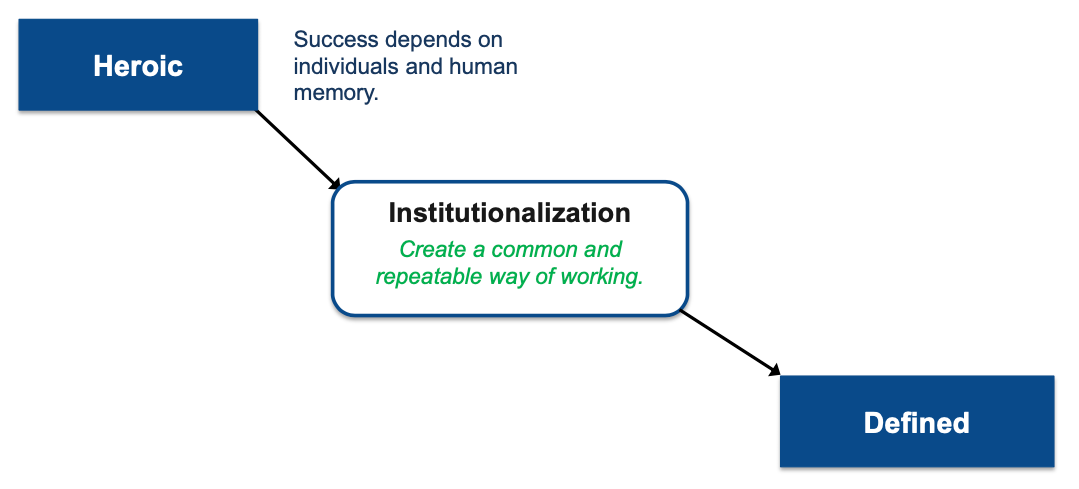
The first transition occurs when the organization recognizes that important operational knowledge cannot continue to reside primarily in people's heads.
Processes become documented. Responsibilities become clearer. Expected ways of working are agreed.
The objective is straightforward:
Create a common and repeatable way of working.
This moves the organization to Level 2 — Defined.
Level 2 — Defined
At the Defined level, the organization has moved beyond reliance on individual memory by establishing a common understanding of how work should be performed.
Processes are documented. Standard checklists support the work. Roles and responsibilities are generally understood.
But defining the process does not, by itself, make execution consistent or the operation visible.
Operational information is available, but it must be actively maintained. People still spend time coordinating the work, exchanging information and establishing a shared understanding of what is happening. Review meetings may require significant preparation simply to establish the current state of the operation.
As workload and complexity increase, that coordination effort grows alongside them.
Management focus: Maintaining a shared understanding
Limiting constraint: Coordination effort
Transition 2 — Inherent Visibility
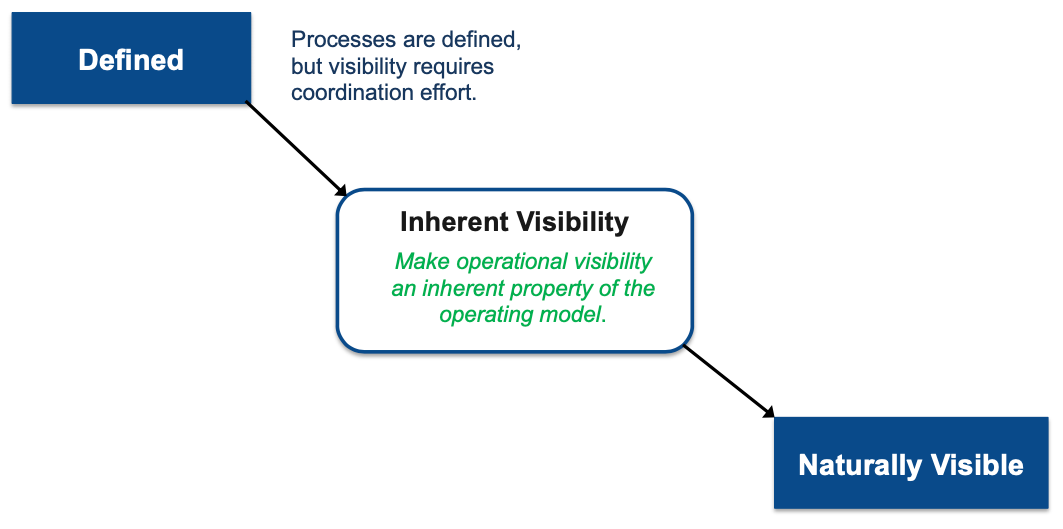
The second transition occurs when the organization recognizes that too much effort is being spent coordinating the work rather than advancing the work itself.
Instead of relying on separate meetings, reports, spreadsheets and conversations to create visibility, the organization establishes a standardized operational platform in which work is performed, coordinated and tracked.
As a result, the information required to perform, coordinate and manage the operation becomes a natural output of the work itself.
The objective:
Make operational visibility an inherent property of the operating model.
This moves the organization to Level 3 — Naturally Visible.
Level 3 — Naturally Visible
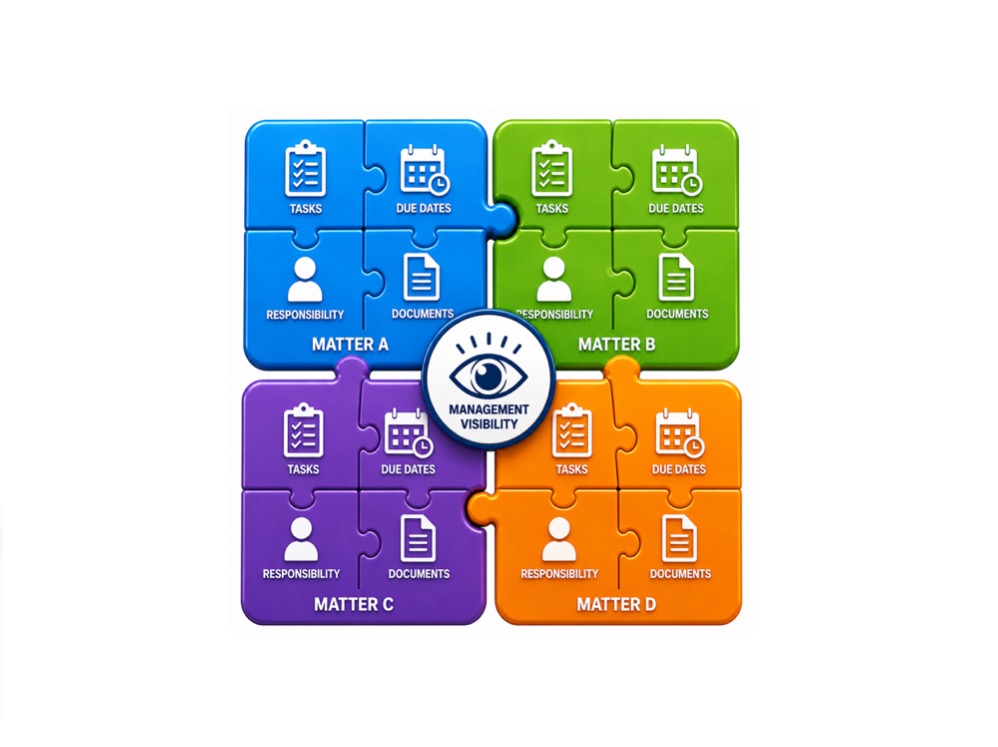
At the Naturally Visible level, work is performed, coordinated and tracked within a common operational platform.
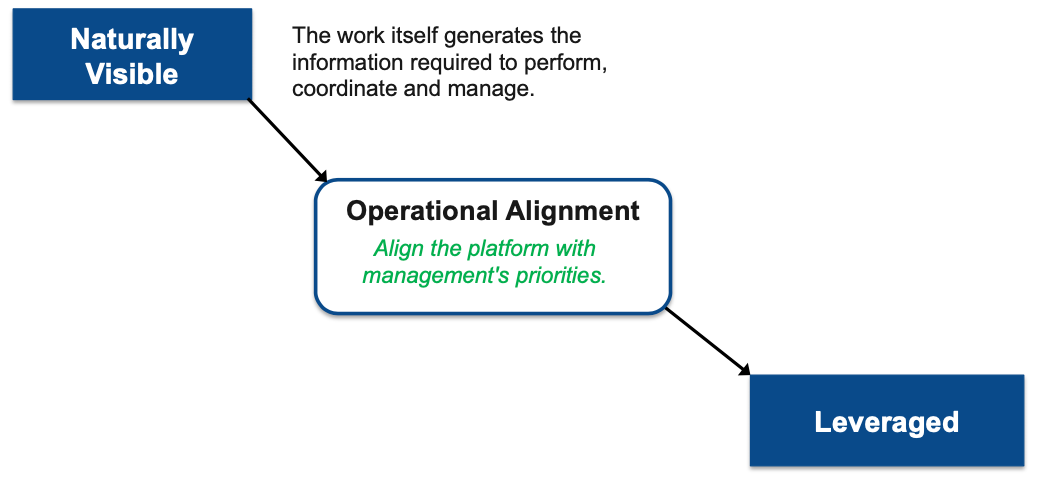
The work itself generates much of the information required to perform, coordinate and manage the operation. Ownership, priorities, progress and exceptions become naturally visible.
Staff can find the operational information they need without interrupting colleagues. Everyone can see which matters require attention. Managers have a consistent view of operational reality.
Review meetings no longer need to begin by reconstructing what has happened. They can begin with a shared understanding of the current state of the operation and focus instead on priorities, decisions and actions.
A shared operational picture now exists, although people still invest effort validating information, communicating priorities and keeping the operation aligned.
Management focus: Identifying what requires attention
Limiting constraint: Management attention
Transition 3 — Operational Alignment
Once the organization trusts the operational platform, it begins asking a different question.
Not:
“Can the system do this?”
But rather:
“Is the platform directing attention to the things that matter most?”
Management progressively aligns workflows, checklists, dashboards, KPIs, exception rules, ownership and management information with its operational priorities.
The platform evolves from supporting the operation to reinforcing the way the organization wants to operate.
The objective:
Align the operational platform with management's priorities.
This moves the organization to Level 4 — Leveraged.
Level 4 — Leveraged
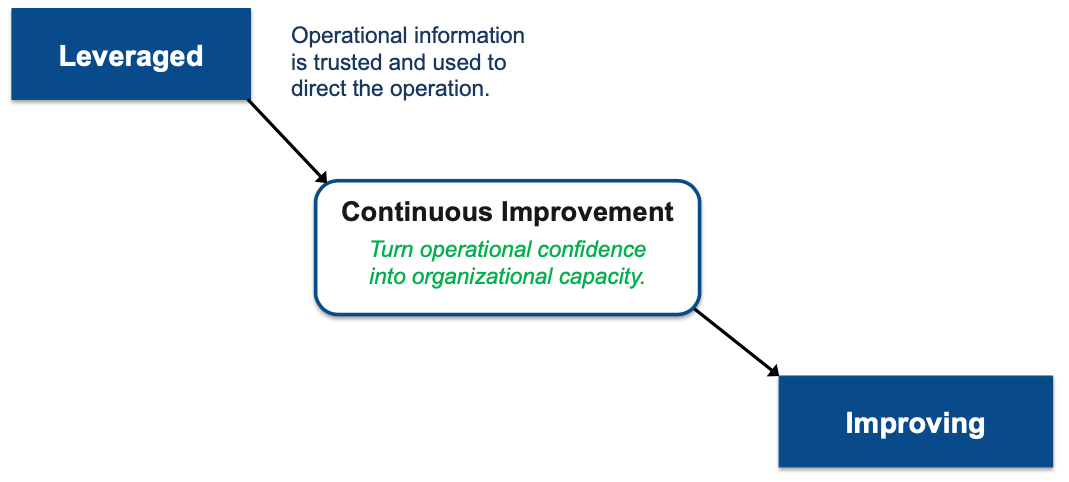
At the Leveraged level, the organization trusts the operational information generated by the work itself.
Teams work confidently from a shared understanding of operational reality. Exceptions naturally attract attention while routine work progresses with minimal intervention. Risks become visible sooner, allowing decisions to be made earlier.
Operational discussions increasingly focus on priorities, judgement and improvement rather than establishing facts or coordinating activity.
Attention has shifted from understanding the operation to directing it. People throughout the organization spend less time coordinating work and more time applying professional judgement to advance the organization's operational priorities.
The operational platform has become a primary mechanism through which the organization directs its operations.
Management focus: Making operational decisions
Limiting constraint: Improvement capacity
Transition 4 — Continuous Improvement
At this point, operational excellence becomes the foundation rather than the objective.
The operation no longer constrains the organization. It enables it.
The organization can redirect the capacity it has recovered toward setting and achieving new business goals and driving continuous improvement.
The objective:
Turn operational confidence into organizational capacity.
This moves the organization to Level 5 — Improving.
Level 5 — Improving
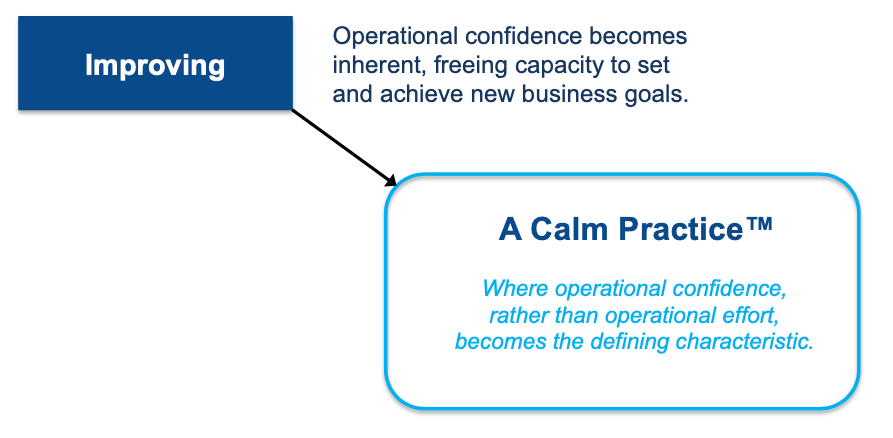
At the Improving level, operational confidence has become an organizational capability.
The organization no longer depends on extraordinary effort simply to keep the operation running effectively. Instead, it has the capacity to pursue new business goals while continuing to improve how work is performed.
Continuous improvement is embedded in the culture. Operational confidence enables growth, innovation and impact.
The organization can evolve without sacrificing the consistency, visibility and reliability it has already achieved.
Management focus: Pursuing broader business goals
Limiting constraint: None inherent to the operating model
The Outcome — A Calm Practice™
The progression through the five levels is not simply a journey toward greater efficiency.
At each stage, the organization removes a different source of operational friction: dependence on individual memory, coordination effort, management attention and limited improvement capacity.
The result is A Calm Practice™ — an organization where operational confidence, rather than operational effort, becomes the defining characteristic.
That doesn't mean the work itself becomes simple. Trust & Estate work remains complex.
It means the operation supporting that work no longer needs to be.
About EstateWorks
EstateWorks is an operational platform built specifically for law firms, banks and trust companies to make Trust & Estate work consistent, visible and easier to manage.
Follow or reach out to learn more about EstateWorks and how we help Trust & Estate organizations manage and improve their operations with confidence.
Download the PDF version for the detailed characteristics, operating models and transitions.
More Trust and Estates Workflow Resources
Other articles that you may find interesting.
-
article
Inherent Visibility
When the work creates its own visibility.
Read More3 Min. Read
-

article
When People Become the System, the Operating Model has Failed
Your people should be running the system - not being the system.
Read More3 Min. Read
-

article
Why Trust & Estates Operations are Different
The unique challenges of estate settlement and administration.
Read More3 Min. Read